
A five-panel cap order moves through several kinds of work: preparing the panels, applying the branding, assembling the cap and completing the trims and packing. The sequence depends on the design. At each handoff, the people receiving the work need to know which item and specification it belongs to.
When reviewing a five-panel cap factory in Bangladesh, ask how the proposed order will carry its references through those stages. The 5-Panel Cap Buying Guide covers the decisions leading to production. This article focuses on the component and version information needed after approval.
Release the panel map and approved combination together
Identify the pattern version, materials and accepted sample before work is released. For a color-blocked cap, mark which material or color belongs to each panel. Keep the visor, inside components and fastening tied to the same item reference.
List any outstanding condition instead of burying it in an earlier comment thread. A sample approved for crown proportions while using a temporary buckle should not leave the buckle choice appearing final in the production record.
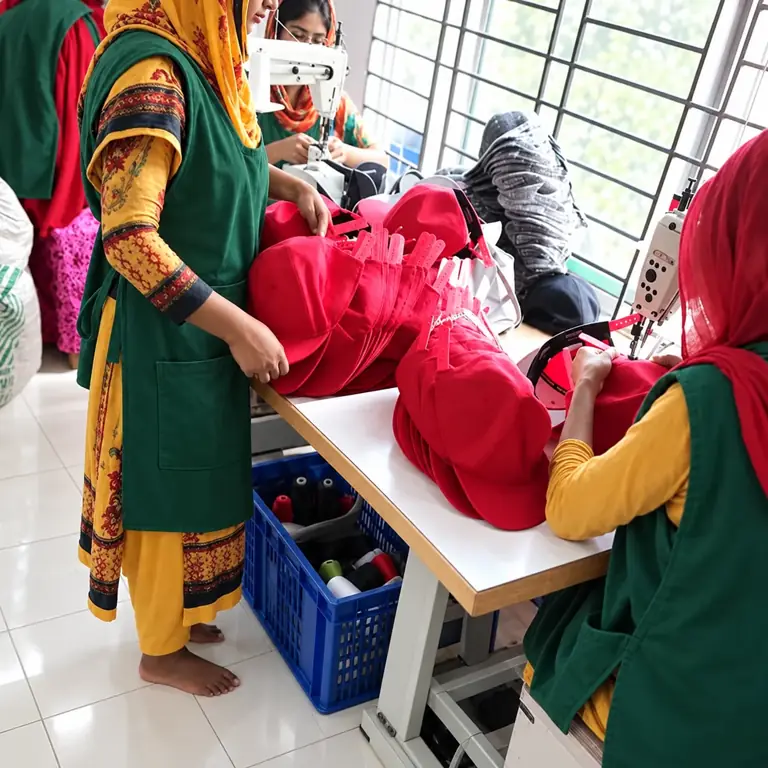
Keep panel groups identifiable before assembly
Ask which references distinguish the cut panels for each item and colorway. If several similar shades or materials are present, the work record should show which group belongs to which cap. Discuss how incomplete groups or held components will be identified.
Where the appearance depends on panel orientation or a print position, include that approved reference with the relevant operation. A general color name will not explain a specific panel arrangement. Use marked views where they communicate the intended result more clearly.
Clarify when decoration enters the sequence
Ask the supplier to describe the proposed route for the selected application. Branding may need references at a particular stage of the construction, and changes can affect more than the artwork file. Keep the approved dimensions, placement and application sample available to the relevant team.
The five-panel logo approval record identifies those references. If an artwork revision is issued after work has started, first establish which components or caps are affected before treating the change as a routine file replacement.
Review a stated process rather than assuming one universal route
Cap construction can involve several coordinated operations. New Era’s account of its cap-making steps is an example from that company’s own production. It helps illustrate why an assembled cap involves more than the visible outer panels.
It does not establish Wenext’s operation sequence or serve as a procedure for every five-panel design. Ask for the route proposed for the specific cap, including any finishing treatment, decoration and component dependencies.
Record quantities and status at the relevant handoffs
Agree which work records are needed for the order. They should identify the item, stage, quantity and status in a way the next team can understand. Keep held work, revised components and items awaiting approval visible.
| Handoff topic | Information to connect |
|---|---|
| Panel preparation | Pattern revision, panel map, materials and item identity |
| Decoration | Released artwork and placement or application reference |
| Assembly | Approved component combination and sample comments |
| Finishing and trims | Applicable process and released label or trim versions |
| Packing | Item quantities, pack composition and carton identification |
Make changes visible to the people doing the next work
A revised closure, panel material or trim file needs a clear item scope. Identify what has already been prepared and ask how the proposed change will be handled. Keep accepted work separate from work awaiting a decision.
Review the affected sample or component where needed. A new material should not inherit every earlier appearance or fit approval simply because the style name stays the same. Record which checks remain valid and which need another review.
Connect the finished cap to the packing breakdown
At the final handoff, the cap, trims and packing instructions should identify the same item. Compare the finished presentation with the accepted sample and the relevant order breakdown. The wholesale assortment and packing guide covers that item-to-carton connection.
For a project discussion, use the Wenext five-panel cap product page. Send the specification, proposed assortment and open handoff questions through Contact Wenext Caps.