
A mesh-back cap can combine a solid front, open mesh, a visor and several small trims. One colour name does not fully describe how those components should look together. State which parts should match, which should contrast and which physical references control the comparison.
Use the Custom Trucker Hat Guide for the complete product brief. This article focuses on mesh-back cap colour matching across the front, mesh and trims, including the viewing conditions used to review the assembled cap.
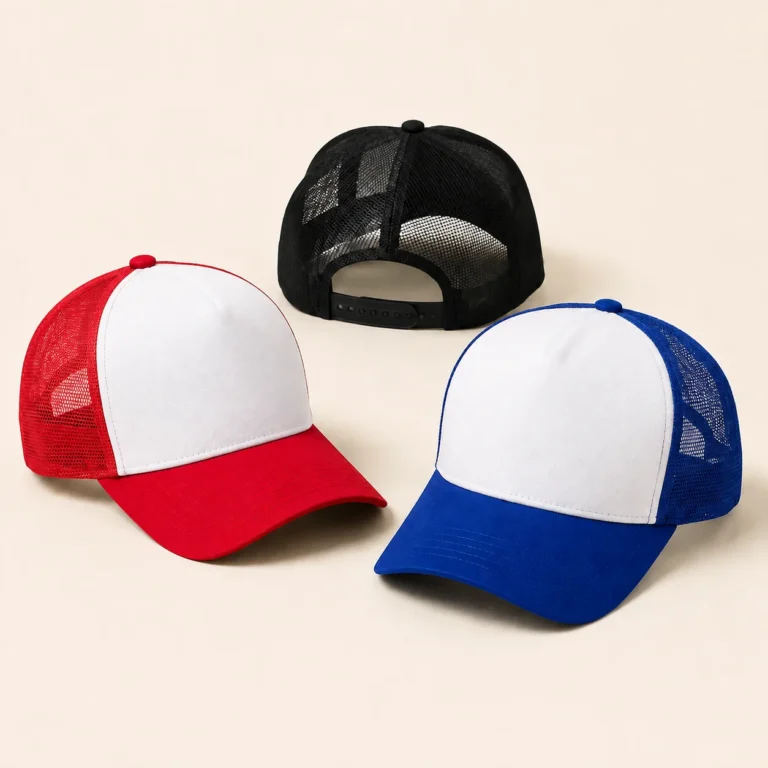
Define the colour relationship component by component
Identify the front fabric, mesh, visor, button, thread and closure separately. For each, record the proposed material and colour reference. A request for a matching cap should say whether the mesh is intended to match the solid cloth or form a deliberate contrast.
Keep the accepted material references with the colour decisions. Replacing a mesh construction or a front finish can change the appearance being compared, even when the supplier uses the same colour name. Mark substitutions before treating the new combination as an approved repeat.
Compare the mesh with a consistent background
Open mesh allows the background to be visible through it. Record the viewing arrangement used for comparison, including the background and which side of the material is shown. Avoid drawing a shade conclusion from two photographs taken against different surroundings.
Check the actual front-and-mesh combination on the assembled cap. Include the visor, stitching and rear closure in the view. The intended result may be a coordinated appearance across different materials rather than an identical surface on every component.
Retain the physical shade references
Pantone’s physical sample guidance explains the role of physical references. Keep the accepted swatches identifiable and use agreed viewing conditions for the material comparison. A screen image can help describe the proposal, while the physical reference controls the accepted shade decision.
Identify the sample and component versions in the comment record. If a photo is needed for remote discussion, show the reference identity and relevant cap view together. Record the final physical decision instead of leaving the result as an unexplained image attachment.
Check consistency across the assembled panels
Review the mesh face, direction and visible joins against the intended construction. Note any unexpected difference between adjacent panels or between the mesh and its binding or stitching. Identify the panel and sample version when requesting a change.
The mesh and panel selection article covers the broader material and balance choices. Colour review is one part of that brief; any colourfastness or other performance requirement needs its own agreed evidence and scope.
Use a component colour record for later orders
| Field | Reference to retain |
|---|---|
| Component | Front, mesh, visor, thread or closure identity |
| Colour intention | Matching, coordinated or deliberately contrasting relationship |
| Physical reference | Accepted material swatch and shade version |
| Viewing arrangement | Background, material face and agreed comparison conditions |
| Decision | Accepted sample combination and open revisions |
Discuss development through the Wenext Caps trucker cap product page, or send the mesh colour brief with the component references, intended cap construction and item quantities.