
Corduroy snapback caps bring visible texture into a cap design. That texture needs to be specified alongside the crown shape, closure and logo. Two fabrics sold as corduroy can produce noticeably different results, so approve the actual swatch and finished sample rather than the fabric name alone.
Use the Snapback Cap Buying Guide to organize the complete product brief. This guide covers the fabric and decoration decisions that deserve extra attention for corduroy.
Start with the rib texture and fabric reference
Corduroy’s raised ribs are called wales. CottonWorks describes corduroy as a cut-pile fabric whose construction creates those ribs. A close-up swatch helps communicate the texture you want more clearly than a distant photograph of a cap.
Record the supplier’s fabric reference, stated fiber composition and any agreed weight or wale specification. Compare the hand, body and surface in person where possible. Do not assume that every corduroy option has the same fiber content or behaves like the fabric in an earlier order.
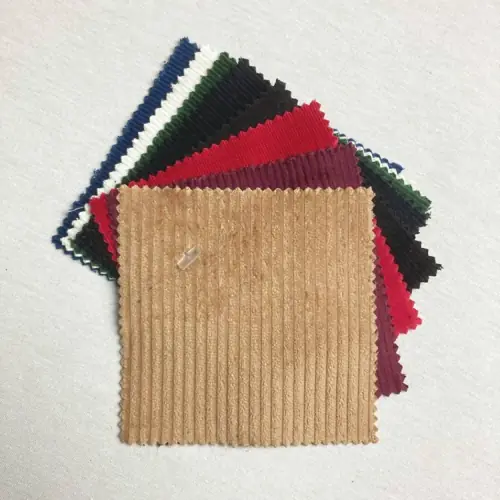
Show the intended rib direction on each component
Mark the desired rib direction on the crown panels and visor rather than leaving it to a general description. If contrasting directions are an intentional feature, show them on the drawing. Review the assembled cap so the team can see how the ribs meet at seams and around the visor.
Ask the sample team to identify the agreed cutting and surface-direction references for repeat orders. Keep these with the technical file so a replacement material or revised panel does not quietly change the visual design.
Approve the color in the complete material combination
Look at the corduroy beside the thread, patch, closure and underbrim references. View the swatch and sample in a consistent orientation and agreed lighting conditions. Record any acceptable variation through the approval process.
Review an actual swatch when choosing from photographs or digital colors. Keep the approved material reference available for the sample and production checks. If a substitution is proposed, assess its texture and color together instead of accepting it by a matching color name.
Sample the logo on the chosen fabric
Review small lettering, narrow gaps and fine outlines on a stitch sample made with the proposed fabric. Check how the logo sits across the ribs and whether the surrounding surface remains acceptable after decoration.
Madeira’s topping guidance discusses keeping stitches above textured pile and lists corduroy among the relevant fabrics. Ask the embroidery team to select and trial a suitable method for the actual design. The trial should include the finished appearance after any topping is removed.
Compare decoration options without changing the brief
If direct embroidery does not give the intended detail, request a separately identified alternative, such as a patch, for review. Record its dimensions, edge, attachment and placement. Compare the completed result on the cap rather than only the artwork file.
The snapback embroidery approval guide covers logo dimensions and stitch-sample checks. Keep each approved method linked to its own sample and quotation so a proposed alternative is not mistaken for the original request.
Use a corduroy sample worksheet
| Detail | Reference to retain |
|---|---|
| Fabric | Material reference, composition and agreed texture specifications. |
| Surface direction | Rib orientation on panels, visor and any contrast components. |
| Colorway | Approved fabric, decoration, closure and underbrim combination. |
| Crown and fit | Finished shape, structure, adjustment and agreed measurements. |
| Logo | Actual-size trial, readable detail, position and surface finish. |
| Inside finish | Sweatband, seams, backing and labels on the completed cap. |
| Care and packing | Supported care information and approved packed condition. |
Review the finished cap and its repeat-order record
Check the surface around seams, embroidery and the visor after the cap is assembled. Review any visible pressure marks or uneven appearance against the approved reference. Include the inside finish and wearer contact areas in the sample review.
Keep care instructions consistent with the complete cap and its components. Agree any needed performance checks for the intended use. Use the OEM technical-file guide to retain the fabric, construction and decoration references for later orders.
Common corduroy snapback questions
Is all corduroy made from the same material?
Check the stated composition and actual swatch for the proposed fabric. Corduroy describes a textured construction, not a complete material specification.
Can a detailed logo be embroidered on corduroy?
Trial the actual design at its intended size on the chosen fabric. Assess lettering, gaps and surface finish before approving the method.
Will a fabric swatch show the finished crown shape?
A swatch helps assess material. Use a complete cap sample to review how that fabric works with the chosen structure, seams, visor and closure.
Plan a corduroy snapback sample
Review the snapback cap product page, then send Wenext Caps your fabric and artwork references. Include the intended texture, colors, crown profile and sample details that need confirmation.