
A fabric swatch can look ideal for a cap while leaving the most important question unresolved: how will it behave with the chosen sweatband, front support and decoration? For custom stretch-fit caps, approve the material as part of a construction rather than as an isolated color and texture.
This guide focuses on selecting and recording materials before the final sample approval. Use the Stretch-Fit Cap Buying Guide for the wider order plan, and the main stretch-fit product page for a manufacturing discussion.
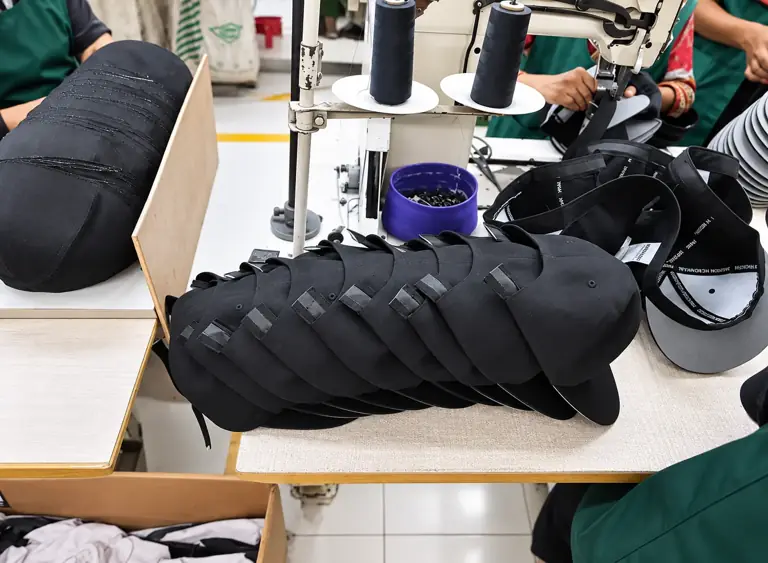
Describe the result you need before requesting options
Explain the intended wearer, activity and appearance. A soft lifestyle cap and a supported front with prominent embroidery can present different development questions. State the required hand feel, surface appearance, color and any performance requirement that needs evidence.
Separate requirements from preferences. If a composition is mandatory, say so. If a material is only a visual reference, invite suitable options and ask the supplier to identify their differences. Do not present a photograph as proof of fabric weight or composition.
Give each swatch an identity
Record the swatch reference, supplier or mill reference where available, stated composition, color and agreed characteristics. Identify which face and direction the team should use. Retain an accepted physical reference instead of relying on an image in a message thread.
Link the swatch to the proposed style and colorway. When two similar materials are under review, keep their names distinct on the sample request. A note such as “use the navy fabric” is ambiguous if there are several navy options.
Ask how stretch will work in the cap
Identify which components provide the intended flexibility. Ask the sample team to explain the proposed crown material, elastic sweatband and internal support combination. A general description such as “stretch fabric” does not define the finished wearing range.
Record any relevant material direction on the technical file and ask how it will be maintained in cutting. Agree the method and conditions for any requested stretch or recovery evaluation. Keep informal handling observations distinct from the results of a defined test.
Review the sweatband with the crown
Identify the actual band proposed for sampling. Record its reference and the agreed construction details. Review it with the crown fabric and seams on the finished sample, including the intended size bands.
A band substitution needs an identifiable review. Ask which parts of the accepted fit and feel may be affected, then determine what needs checking again. The stretch-fit sizing guide helps separate relaxed measurements, wearing ranges and wearer observations.
Check decoration on the selected surface
Use the actual fabric and proposed support when developing embroidery or another logo method. Review small lettering, edges, puckering and the inside surface at the intended dimensions. A logo trial on an unrelated material cannot settle every question about the cap.
Madeira’s backing guidance describes the relationship between material, design and embroidery support. Use it as technical background, then confirm the actual combination on your sample. Ask the supplier to identify any conflict between the selected surface and requested logo result.
Keep color and finish approvals separate
A material can be accepted for its construction while its final color remains open. Record those approvals separately. Identify the swatch, color reference and sample revision covered by each decision.
Where the order uses several colors, confirm whether the proposed materials and finishes are the same. Review any difference that may affect appearance, feel or the accepted construction. Do not assume that a shared fabric name proves every colorway is identical.
Make a short material-approval record
- Component: crown fabric, sweatband, support, underbrim or other identified part.
- Reference: the swatch or component actually reviewed.
- Application: the styles, colors and size bands it will be used in.
- Status: proposed, provisional, accepted or awaiting further checks.
- Sample: the construction and revision in which it was evaluated.
- Open question: any color, decoration, fit or availability decision still unresolved.
Connect this record to the OEM technical pack. Keep a change to a component visible in both documents so the sample and production instructions agree.
Control substitutions and reorders
If a material is unavailable, request an identifiable alternative and a clear explanation of what differs. Decide which samples or checks are needed before acceptance. A similar-looking substitute should not silently inherit the approval of the earlier combination.
For repeat orders, provide the accepted material and cap references alongside the new quantity breakdown. Ask the supplier to confirm current availability. Keep the new approval record distinct where a fabric, band, finish or decoration component changes.
Material-selection questions
Does an elastane percentage establish the fit?
No single composition entry replaces review of the complete cap. Confirm the component combination, intended size bands and finished-sample result.
Can a temporary color be used for the first sample?
It can be proposed, but identify what that sample is intended to demonstrate. Keep final color and any affected material checks open until the relevant reference is reviewed.
What should I send with a fabric enquiry?
Send the style reference, wearer and use, required appearance, material preferences, size-band plan, logo method and proposed quantities. Mark which decisions require options or further evidence.
Discuss the material combination
Review the stretch-fit cap manufacturing page, then send Wenext Caps your material brief. Identifiable references give the team a clearer basis for discussing the actual construction.