
“Baseball cap” describes a broad design direction, not one fixed silhouette. A stretch-fit version can have a supported front or a softer crown, different depths and different visor profiles. Decide which shape you want before treating a familiar style name as a complete instruction.
This guide explains how to review a stretch-fit baseball cap’s appearance on the table and when worn. Use the Stretch-Fit Cap Buying Guide for the overall buying sequence and the main stretch-fit cap product page for manufacturing enquiries.
For the wider construction and order-planning choices, use the Baseball Cap Buying Guide.
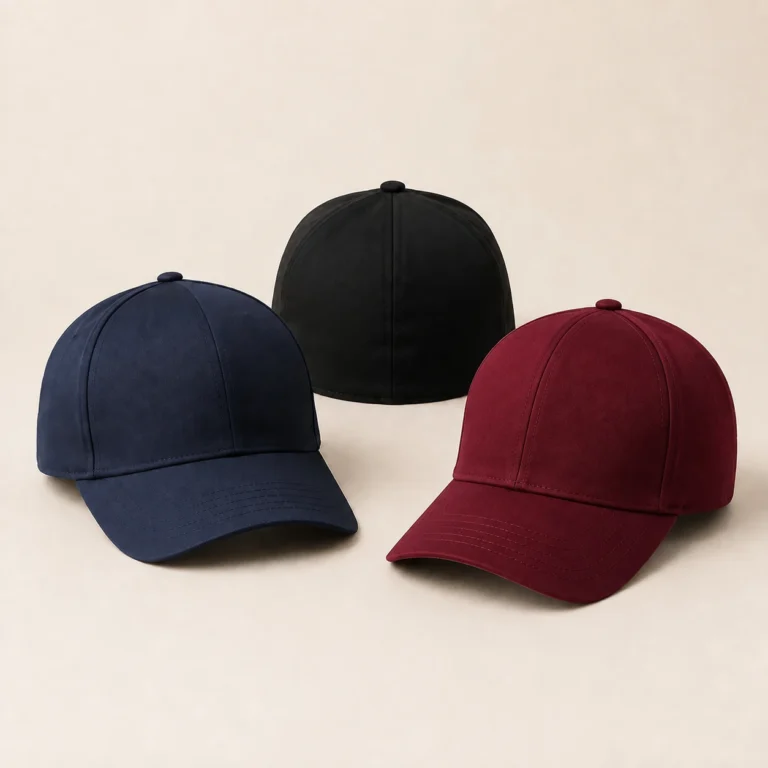
Separate silhouette from the size system
Define the desired crown and visor shape independently from the stretch size bands. A closed back does not settle the crown depth, front structure or visor curve. Keep these as separate decisions in the brief so a shape revision does not silently become a sizing change.
For outside inspiration, New Era’s 39THIRTY guide presents its own stretch-fit cap designs. Use a branded reference to explain a direction, then establish the actual materials, measurements and size system for your product.
Choose references that show the worn profile
A front photograph can hide a deep crown or a visor angle that becomes obvious from the side. Supply a small set of consistent views and explain which feature each should control. Include the inside when the construction is important to the appearance.
Ask for sample views in the intended wearing position. Avoid judging one sample pulled low and another sitting high, because that makes the shape comparison harder to interpret. Keep fit concerns identifiable rather than forcing a sample into a position it does not naturally hold.
Define the front structure and panel balance
State whether the front should hold a defined shape or have a softer appearance. Identify the proposed support and review it with the selected fabric. A description such as “structured front” still needs a physical reference for the result you expect.
Show the panel arrangement, center seam and visible seam lines. Review front height and crown depth together with the side and rear proportions. For a broader construction enquiry, the baseball cap product page introduces the related product family.
Specify the visor as supplied
Record the requested curve or flat profile, relevant dimensions, underbrim color and stitch layout. Mark how measurements will be taken. A screen image cannot supply dependable measurements if the camera angle and scale are unknown.
Review the visor against the whole crown from the front and side. Check the approved presentation after unpacking as well. If the reference was manually reshaped for a photograph, identify that difference before accepting it as the supplied product profile.
Review how the materials support the shape
Identify the crown fabric, reinforcement and sweatband used in the shape sample. Mark temporary components and ask which appearance or fit decisions remain open. The stretch-fit material-selection guide helps keep those references clear.
When a component changes, review the accepted silhouette again where the change could affect it. Record the new sample revision rather than approving a replacement material only from a loose swatch and assuming the finished cap will look unchanged.
Place the logo on the finished front
Provide artwork dimensions and a placement reference that can be followed on the cap. Identify any center seam or curved surface the design crosses. Check the logo’s apparent position when the cap is worn, not only when it lies flat.
Compare the decorated and undecorated references where useful, and review the inside finish. Keep a change to logo size, backing or placement connected to the actual sample. Approval of the artwork alone does not establish the completed silhouette.
Check the planned size bands
Agree which size bands need physical shape and fit review. Keep each observation attached to the sample size. A balanced front on the reference size does not automatically document the appearance of every other version.
Use the sizing guide for the wearing-range checks and the sample-feedback guide to record specific comments. Distinguish a circumference concern from a crown-depth or appearance concern.
Create a short silhouette approval set
- Reference: the accepted sample and specification revision.
- Views: front, side, rear and inside photographs that show the relevant details.
- Construction: the actual fabric, front support and sweatband combination.
- Visor: the supplied profile, measurement references and stitch details.
- Decoration: artwork version, finished dimensions and placement.
- Range: the size bands reviewed and any remaining approval question.
Retain the physical sample where it is the controlling reference. Photographs help explain the decision but do not capture every aspect of shape, feel or fit.
Shape-development questions
Does a baseball cap have to use a curved visor?
State the profile you want rather than relying on the category name. Review that visor with the selected crown and intended presentation.
Can I combine features from several references?
Yes, identify which feature comes from each reference and ask the sample team to review whether the combination works. Keep unresolved choices visible.
What should I approve before bulk production?
Confirm the relevant sample, materials, silhouette, size bands, decoration and packing presentation. Record accepted details and outstanding checks separately.
Discuss your baseball-style stretch-fit cap
Review the stretch-fit manufacturing page, then send Wenext Caps your shape references and size-band brief. Mark the features to keep and the changes you want developed.