
For buyers comparing fitted vs adjustable baseball caps, the size system is the first decision to make. Individual fixed sizes, rear adjustments and stretch size bands create different sampling, assortment and distribution needs.
Use the Fitted Cap Sizing and Buying Guide for fixed-size development, or the Baseball Cap Buying Guide for the broader construction brief. Choose the intended fit arrangement before treating the quantity breakdown as final.
Define the three size arrangements clearly
For this comparison, a fixed-size fitted cap uses an individually specified size without a rear adjustment. An adjustable cap uses the agreed closure and adjustment range. A stretch-fit construction uses a defined size band and needs its own review of the finished fit.
Product names can leave those details unclear. New Era’s sizing guide separates its own fitted, stretch-fit and adjustable charts. Use brand charts as references, then establish the actual size system and checks for your custom product.
Start with the wearer information you can use
For a known team or staff group, identify the relevant wearer measurements and sample-fit results. For a retail range, use the demand and size information available for that audience. Keep assumptions visible where the information is incomplete.
An adjustment can help cover the agreed range, but the finished crown, depth and closure still need review. A fixed size can provide a particular closed-back construction while requiring a quantity for each size offered. Assess those needs for the actual audience.
Keep the silhouette independent of the closure choice
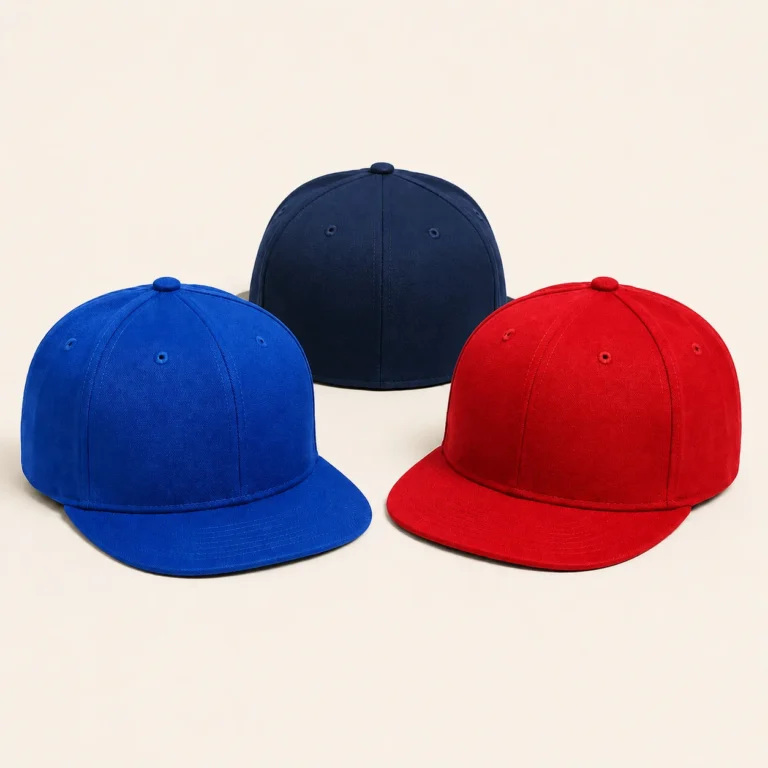
Record crown depth, front structure, panel layout and visor profile separately. A rear closure does not tell the supplier whether you want a high or shallow crown, a soft or supported front, or a flat or curved visor.
When comparing samples, hold the intended design references consistent where possible. Identify any changes besides the size arrangement so a different fabric or crown shape does not get mistaken for a closure preference.
Compare the sampling scope
For fixed sizes, agree a size-set review that covers the intended range. For an adjustable style, check the agreed settings on the complete cap, including the rear opening and attachment. For a stretch-fit style, assess the intended size bands and actual construction.
The stretch-fit sizing guide covers that separate review. For a snap closure, the Snapback Cap Buying Guide helps organize closure and fit decisions.
Use a size-system comparison sheet
| Decision | What to compare |
|---|---|
| Intended wearer | Known fit information, target audience and unresolved size assumptions. |
| Size system | Individual sizes, adjustment range or stretch size bands. |
| Silhouette | Crown depth, structure, panel layout and visor profile. |
| Sample scope | Sizes or settings checked and the actual materials used. |
| Branding | Artwork area, seam positions and any size-specific placements. |
| Assortment | Quantity of each variant and the item-identification plan. |
| Distribution | Size assignment, label information, receiving and reorder needs. |
Assess the artwork on each proposed construction
Check the logo area, panel seams and inside finish on the actual sample. If you switch size systems and also change the front construction, review the decoration again. A proof accepted for one cap does not describe the finished result on every alternative.
For fixed-size collections, record whether artwork dimensions or placement vary across the range. Keep those assignments connected to the fitted technical file.
Plan the assortment and comparison costs
List the quantity of every size or size band for each colorway and artwork version. Review the relevant minimum conditions, sample scope and packing requirements for each proposal. Do not assume the two size systems have identical commercial conditions.
Use the fitted assortment guide when planning individual sizes. For other cap constructions, review the baseball cap product page and request a comparable brief and quotation.
Common fitted-versus-adjustable questions
Does an adjustable cap remove the need for fit checks?
Check the complete cap at the agreed settings, including crown shape, depth and closure behavior.
Can a fixed-size cap have a curved visor?
Specify the visor profile separately from the size system and confirm the complete design in the sample.
Is one system always the better commercial choice?
Compare the audience, sample requirements, assortment and complete quotation scope for the actual project.
Choose the fitted-cap specification for your range
Review the fitted cap product page, then send Wenext Caps your wearer and construction brief. Identify the size arrangements you want compared and the sample evidence needed to choose between them.