
Cotton dad hats can differ in weave, weight, surface and finished feel even when they share a similar silhouette. A useful material brief identifies those choices separately. “Soft cotton” communicates a preference, but it does not identify the fabric that a sample team should use or a repeat order should follow.
Use the Custom Dad Hat Buying Guide for the complete cap specification. This checklist focuses on fabric identity and sample selection. Discuss a proposed material direction through the dad hat product page.
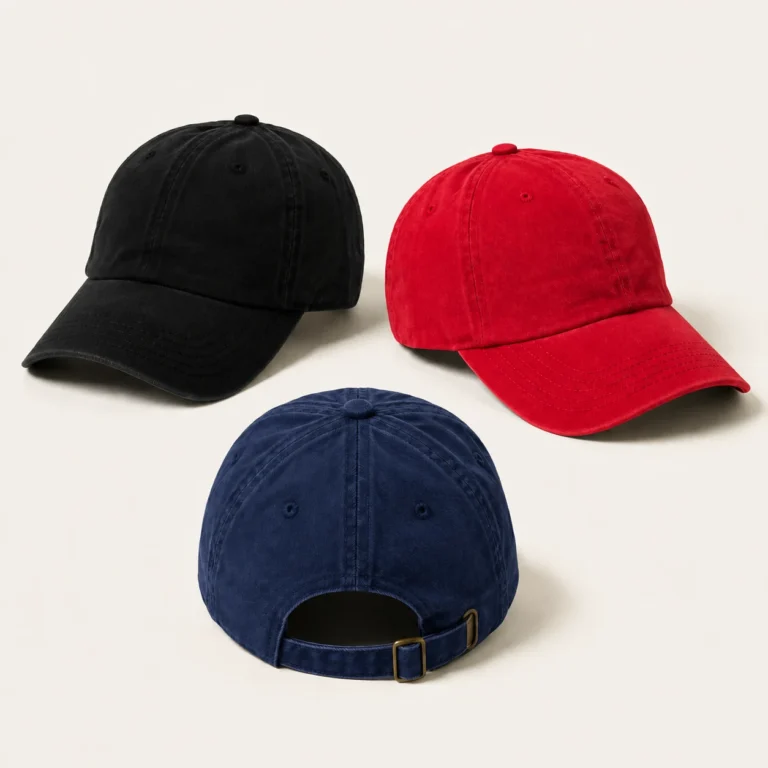
Keep fiber content separate from weave
Ask for the proposed composition and an identifiable fabric reference. If a blend is being considered, record that proposal explicitly rather than continuing to describe it as an unspecified cotton material. Confirm the information needed for the actual product and intended market.
Then identify the fabric construction. CottonWorks’ woven fabric reference describes structures such as plain and twill weaves, including twill’s diagonal pattern. A weave describes how the yarns are arranged; it does not by itself establish the fiber composition or the finished cap’s performance.
Give the swatch a traceable identity
Keep the swatch reference, supplier description, relevant specifications and review date together. Record whether it is the intended material or a proposed substitute. A loose piece of fabric without a reference is difficult to connect to the next sample round.
Where weight is part of the requirement, state the unit and the basis of the proposed specification. Avoid choosing a universal weight merely because another cap was described with that number. Compare the material’s actual suitability for the intended construction and appearance.
Describe the surface and finish you want
Explain whether the desired surface is clean, brushed, softly finished, washed or deliberately faded. Keep a physical or sample reference where touch and appearance matter. A finish description should lead to a reviewable result, not an assumed recipe.
For a washed option, the washed cotton material checklist covers the relationship between the starting swatch and the finished cap. Identify which stage each reference represents so an unwashed swatch is not mistaken for the final color and feel.
Compare fabrics on a consistent basis
When considering several options, record the same fields for each: composition information, construction reference, weight where relevant, color direction, finish stage and sample status. Keep the intended use in view without assuming that a particular fiber name guarantees comfort or durability.
Review the swatches together under consistent conditions. Write the observed differences in concrete terms, then ask the supplier which options can be developed into the proposed cap. Separate an aesthetic preference from any performance requirement that needs evidence.
Check the assembled crown and visor relationship
A swatch helps select a direction; it does not show the complete cap. Review the proposed fabric on an assembled sample with the intended support, sweatband, visor and closure. Record which components are actual and which are provisional.
Use the low-profile dad hat fit review for the agreed wearing setup. If a material change affects the appearance or fit, identify the relevant observation before requesting a revision.
Review decoration on the selected fabric
Connect the logo method, artwork size and placement to the actual material version. A decorated sample on a different fabric may answer only part of the question. Keep that limitation visible when deciding which approval checks remain open.
The custom logo dad hat brief helps organize the application inputs. Assess the graphic, surrounding panel and inside result where relevant to the proposed method, rather than approving the artwork and material as unrelated decisions.
Ask for evidence where a claim matters
If the project requires a particular material claim, performance result or certification, agree the applicable evidence and its scope with the responsible party. Confirm that any document identifies the relevant material or product and the actual requirement.
Do not turn a generic fabric description into a test result. “Cotton,” “soft” and “premium” are not substitutes for evidence of a specified performance property. Keep proposed checks separate from results already received and reviewed.
Retain the final material reference for production
- Identify the accepted fabric and relevant specification.
- Keep the starting swatch and finished appearance references distinct.
- Name the cap sample that supports the material approval.
- Record decoration and trim versions reviewed with it.
- Mark any substitution or remaining condition explicitly.
For a repeat order, review the material proposal against the retained references. The Dad Hat Sampling Guide explains how to record approval scope and decide which changes need another check.
Common cotton dad hat material questions
Does cotton twill identify the complete fabric specification?
It gives useful material direction, but the actual composition, construction reference and other required details still need to be identified. Approve the material through the relevant swatch and cap sample.
Can a fabric photograph replace a swatch?
It can communicate visible appearance. Decide which physical reference is needed for color, feel and other aspects that the photograph cannot establish.
What should accompany a fabric enquiry?
Send the cap reference, available swatches, desired color and finish, decoration plan and quantities. Use Contact Wenext Caps to review the proposed material options and outstanding evidence requirements.