
Low profile dad hats need a fit reference that is more precise than the style name. A cap may look shallow in a product photograph yet sit differently on the intended wearer. Crown depth, opening, visor position and closure setting should therefore be reviewed together on an identifiable sample.
Use the Custom Dad Hat Buying Guide for the complete specification and the dad hat product page to discuss a design. This article focuses on making the fit review repeatable and the resulting comments useful.
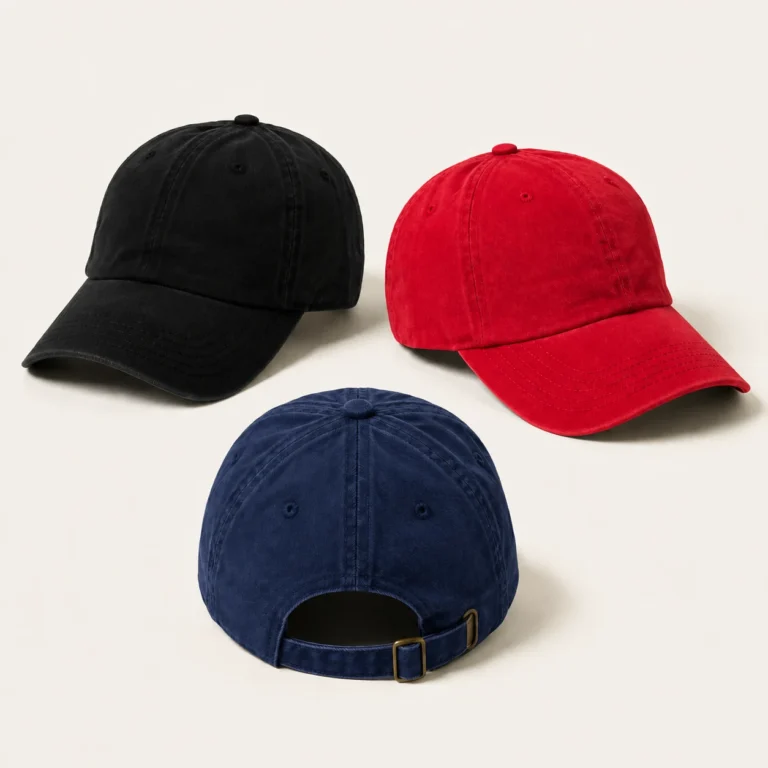
Show the intended wearing position
Provide front, side and rear views that explain how the cap should sit. Mark the crown line and the relationship to the ears, forehead and visor. If a reference cap is available, identify the features it controls and any differences that should not be copied.
A cap arranged for a retail photograph may have been supported or reshaped. Keep that presentation separate from a worn fit reference. Ask the sample team to show the condition that will actually be used for approval.
Keep wearer measurements and cap dimensions distinct
If wearer head measurements are used, record the method and unit consistently. Use a flexible tape and an agreed position, keeping the tape straight and comfortably snug. Do not mix a wearer’s head measurement with a measurement of the cap opening under the same field name.
New Era’s official sizing page illustrates a head-measurement method in its own sizing workflow. Its numerical charts apply to the listed brand styles; they are not a Wenext custom dad hat size specification. Agree the actual fit requirements and review method for the proposed cap.
Record the closure setting used in the review
Name the closure component and show its setting during the fit check. For a buckle strap, record the relevant strap position or another agreed reference that can be repeated. A photograph with the back hidden can leave an important part of the fit setup unclear.
Review the available adjustment and strap handling on the intended wearer references. An adjustable cap should not be described as suitable for every wearer solely because the back can be tightened. State the range or wearer group being considered and the checks needed to assess it.
Separate depth comments from opening comments
Describe where the sample differs from the reference. Does the crown sit too high in the intended position? Is the cap being pulled down to compensate for a loose opening? Does a tighter closure change the rear opening or panel appearance?
Keep those observations separate so the supplier can propose a targeted change. “Make it smaller” may refer to several different features. A marked view and the agreed measurement points give the next sample a clearer purpose.
Compare the visor with the worn crown
Record the supplied visor curve and how it meets the front of the crown. Use consistent front and side views when comparing revisions. Confirm whether the desired appearance should be present out of the pack or depends on a later styling step.
Keep a shape concern distinct from a decoration concern. If a large logo changes the visual balance, discuss its dimensions and position using the custom logo dad hat brief. Do not change the crown solely to accommodate an artwork version that has not yet been accepted.
Review the actual material and inside components
Identify the fabric, sweatband, front support and closure used in the fit sample. Mark substitutes as provisional. An early construction sample can answer a useful question, but its approval needs to state what will be rechecked when the final components are available.
For a washed design, review the intended finished state and use the washed dad hat shape checklist. Keep material and finishing changes visible when deciding whether a previous fit approval still applies.
Use a short fit-review record
- Sample: style, revision and actual component references.
- Setup: wearer or display reference, wearing position and closure setting.
- Measurements: named points, method, units and review condition.
- Views: consistent front, side, rear and relevant inside photographs.
- Decision: accepted features, requested changes and items still provisional.
Agree the points and criteria that matter for the actual design. Do not introduce universal depth measurements or tolerances simply because another brand publishes numbers for its own product.
Confirm a revision against the original comments
When the next sample arrives, repeat the agreed setup and check the requested change first. Then review the features intended to remain accepted. Keep a dated record of the version that becomes the final reference.
The Dad Hat Sampling Guide explains how to connect fit comments with the wider approval process. Retain the reference needed for subsequent production and repeat orders.
Common low-profile fit questions
Does low profile define one crown height?
Use the term as a direction, then specify the shape and measurements required for the actual design. Confirm the result on the intended fit sample.
Can I compare two samples with different closure settings?
Record the difference and decide what the comparison is meant to establish. For a direct revision comparison, use a consistent setup wherever the agreed method requires it.
What should I send for fit development?
Send the reference cap or views, intended wearer information, available measurement details, fabric direction and closure preference. Use Contact Wenext Caps to agree the proposed fit reference and sample checks.