
A fitted cap factory workflow needs to keep size-specific parts and references identifiable as work moves between operations. The buyer’s concern is practical: the correct components, artwork and labels must stay connected to the intended size and order item.
Use the Fitted Cap Sizing and Buying Guide for the product brief. Then ask the production team to explain the proposed routing, handover records and checks for the actual style.
Release the current specification before work begins
Identify the technical-file revision, approved sample and size set used for the order. Keep provisional details visible and state which work depends on their approval. A style name by itself does not identify the accepted measurements or components.
The OEM fitted specification guide covers those records. Agree how a team member at the next operation will identify the current instructions and recognize an earlier version.
Keep material and size bundles traceable
Ask how panels, visor components, sweatbands and trims are identified before assembly. A bundle reference should connect the work with its style, colorway, size where relevant and quantity. Where components are shared across sizes, make that relationship explicit.
Review how partial bundles, replacement parts and work awaiting clarification will be recorded. A useful handover distinguishes ready work from held work, so an unresolved component does not disappear into the next group’s total.
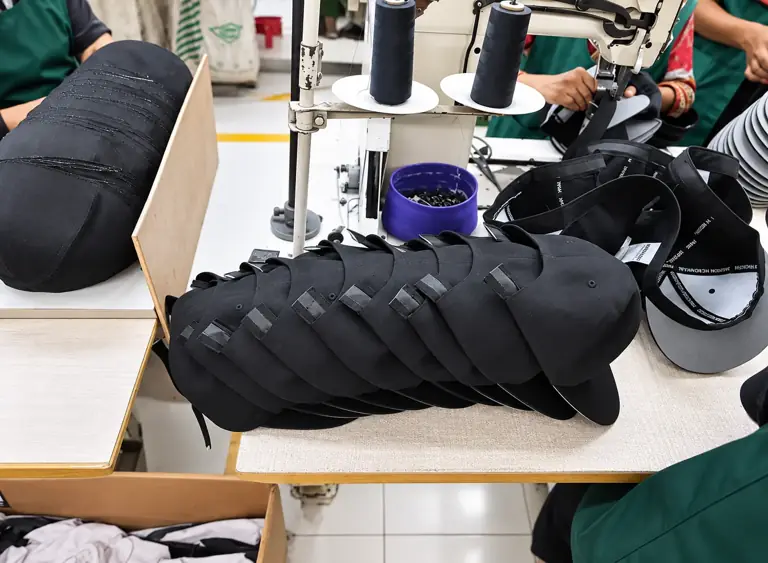
Identify the decoration route and artwork version
Confirm which decoration operations use separate components and which use an assembled cap for the proposed design. The route needs to suit the artwork, fabric and construction. Keep the accepted trial and artwork revision accessible at the relevant step.
For a visual example of cap-making operations, New Era’s manufacturing overview shows its own sequence of cutting, bundling, sewing and finishing. It illustrates why handovers matter; the route for your custom order must be confirmed separately.
Check identity again during assembly
At assembly handovers, reconcile the item reference and quantity with the work received. Review the approved panel layout, crown support, visor attachment and inside finish. Keep size-specific instructions visible where the construction requires them.
If a finding needs correction, identify the affected group and the next action. Record returned or replacement work in a way that allows the quantity to be reconciled later rather than counting it twice.
Use a simple production handover record
| Handover field | Information to identify |
|---|---|
| Work group | Order, style, colorway, size where relevant and bundle reference. |
| Controlling version | Technical file, sample and artwork revisions. |
| Operation | Completed work and the next agreed step. |
| Quantity | Units received, transferred, held or returned for correction. |
| Check result | Applicable identity, construction or measurement checks. |
| Exception | Affected units, evidence and an assigned next action. |
| Handover status | Responsible team, record date and release condition. |
Retain size identity through finishing and inspection
Confirm how the finished cap will be checked against its own size specification and approved shape. Identify the inspection scope and measurement method in advance. A shared-looking crown or logo does not remove the need to identify the actual size being checked.
Keep label versions connected to the same item. The fitted trim approval guide helps organize size labels and other variable data through the finishing stage.
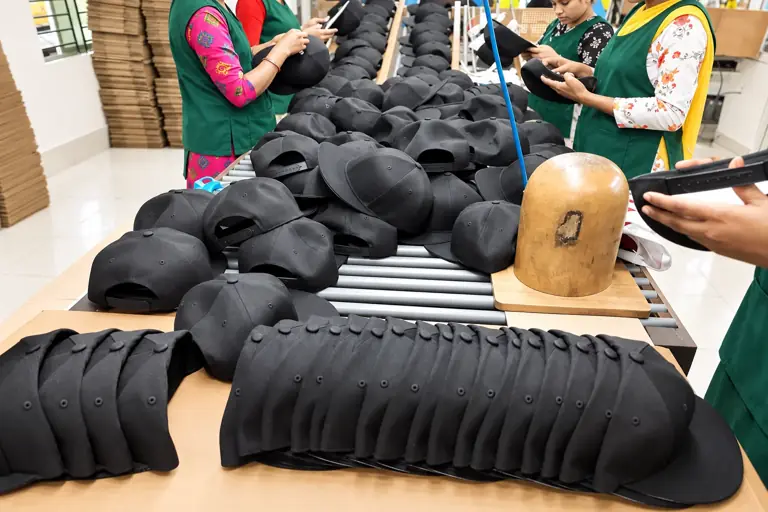
Reconcile the packing handover by item
Match released finished quantities with the packing instruction and carton plan. For mixed-size orders, reconcile every variant as well as the overall total. Identify goods still held or awaiting an agreed action separately from packed goods.
Use the wholesale fitted assortment guide for the item and carton records. Ask for the actual handover status rather than interpreting a general “production finished” update as confirmation that the shipment is ready.
Common factory-workflow questions
Does every fitted style follow the same operation sequence?
Confirm the proposed route for the actual materials, decoration and construction. Keep the approved references at the operations where they are needed.
What should a bundle reference show?
It should connect the work with its item identity, quantity and controlling instructions, including size information where relevant.
How should held work be recorded?
Identify the affected group, reason and next action, and keep its quantity distinguishable from work released to the next step.
Discuss the fitted-cap production route
Review the fitted cap product page, then send Wenext Caps your specification and order breakdown. Highlight the size, decoration and handover details that need confirmation for your project.