
The snapback cap production process is easier to follow when every stage has a clear reference and a defined approval point. Materials, artwork, construction and packing need to stay connected as the cap moves through development and production.
This guide explains the decisions a buyer can track. Confirm the actual sequence with the supplier for the proposed construction and decoration, and use the Snapback Cap Buying Guide to organize the initial specification.
Establish the current production reference
Identify the style code, technical-file revision and approved sample before treating development as complete. Record which details are accepted and which still need a decision. A sample may establish the shape while a particular color, label or artwork version remains open.
Keep the material list, measurements, decoration files and packing instructions connected to that reference. The OEM snapback technical-file guide provides a practical structure for those records.
Confirm the material and component set
Review the proposed crown fabric, front support, visor components, sweatband, snap closure and trims together. Use swatches or physical examples with matching codes so the team can identify what was approved.
When a component changes, record the affected item and the checks that need review. A different support, fabric finish or closure can influence the cap’s appearance or fit. Resolve the change against the current specification rather than leaving it as an informal substitution.
Connect cutting and decoration to the approved design
Panel shapes and component proportions carry the intended silhouette into the cap. Confirm the pattern or construction reference used for the order, including the front layout and seam positions that matter to the artwork.
Decoration may be applied at a stage chosen for the construction and method. Ask which trial or sample approves the artwork on the intended material, and keep its dimensions, placement and revision visible. New Era’s manufacturing overview offers a visual example of cutting, sewing, embroidery and finishing operations in cap production.
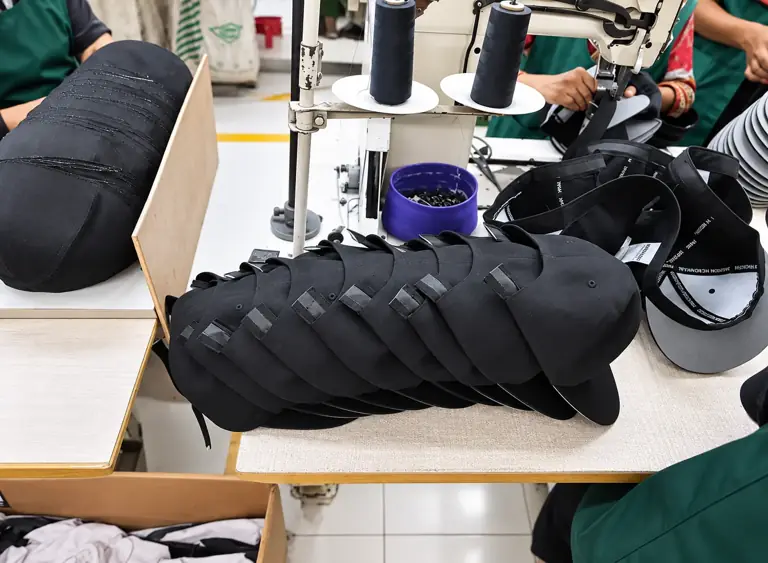
Review assembly as a complete cap
Crown assembly, visor attachment, sweatband sewing and closure attachment bring separate components into one shape. Check their relationship in the finished sample: front balance, visor alignment, rear-opening finish and the agreed adjustment range.
Use the closure specification checklist when reviewing the back of the cap. The closure component and the way it sits in the finished crown belong in the same fit discussion.
Keep a stage-to-reference worksheet
| Stage | Buyer reference or decision |
|---|---|
| Development | Current brief, accepted sample details and open changes. |
| Material preparation | Approved component codes, colors and physical references. |
| Cutting and decoration | Construction version, artwork revision, placement and trial approval. |
| Cap assembly | Agreed shape, measurements, closure and inside finish. |
| Inspection | Defined checks, findings and decisions on any reported issue. |
| Packing | Item identities, labels, assortment and carton instructions. |
| Release and handover | Required approval status, quantity records and agreed delivery arrangements. |
Define what inspection will examine
Agree the measurement method, visual criteria and sample reference used to assess the goods. Relevant checks can include crown symmetry, seam finish, logo position, visor presentation, closure attachment and item identification.
Ask how a finding will be recorded and who will review a question that needs a decision. Keep photographs and measurements tied to the relevant style, colorway or production group so the issue can be located and discussed accurately.
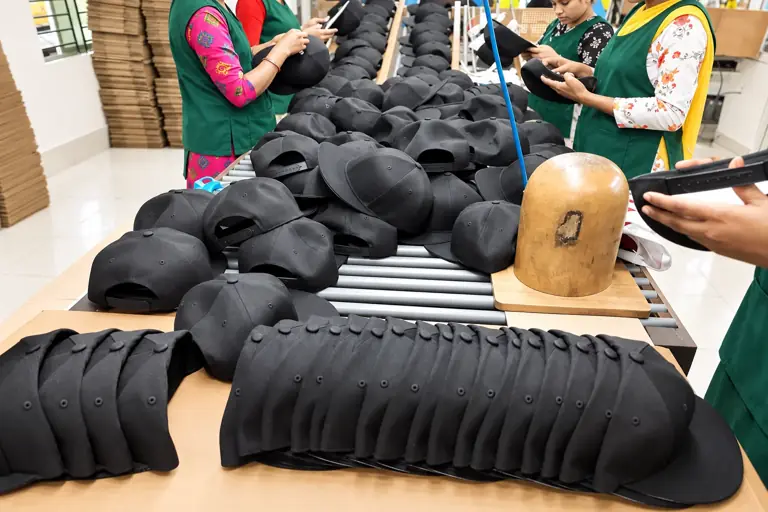
Match the packing to the approved item list
Check labels, hangtags, barcode data where required and the packing ratio for each version. The receiving team needs the same item identity used in the order record. For mixed cartons, record the contents and assortment reference explicitly.
The private label trim guide and wholesale assortment guide cover those approvals in more detail. Review the packed presentation so the crown and visor arrive in the intended condition.
Use milestones to discuss timing
Separate development approval, material confirmation, production completion and shipment arrangements in the plan. Ask what each proposed date means and which decisions it depends on. A change after approval may require a revised sample, material review or quotation.
Keep the current plan with the quotation scope and delivery assumptions. That makes it easier to see which commitment has been confirmed and which point is still being discussed.
Common production-process questions
Does every snapback follow exactly the same sequence?
The routing depends on the construction, materials and decoration method. Ask the supplier to explain the proposed stages and the approval references used for your cap.
What should happen when a component changes after sampling?
Identify the change in the current file, review its effect on appearance or fit and confirm which approvals and commercial assumptions need to be updated.
Which reference should receiving teams use?
Provide the agreed item list, quantity and packing records, along with the approved product and inspection references relevant to the delivery.
Discuss the production plan for your snapback order
Review the main snapback cap product page, then send Wenext Caps your current specification. Include the sample status, quantity split, packing needs and required milestones so the proposed production route can be reviewed clearly.