
A dad hat production handoff should identify what is moving to the next stage and which approved version it follows. A familiar style name is not enough when the order contains several colors, logos or trim packages. Clear references help the teams involved keep materials, work counts and open comments connected.
Use the Custom Dad Hat Buying Guide for the overall product specification and the dad hat product page for a project discussion. This checklist focuses on the records that support the move from an accepted sample to the finished order.
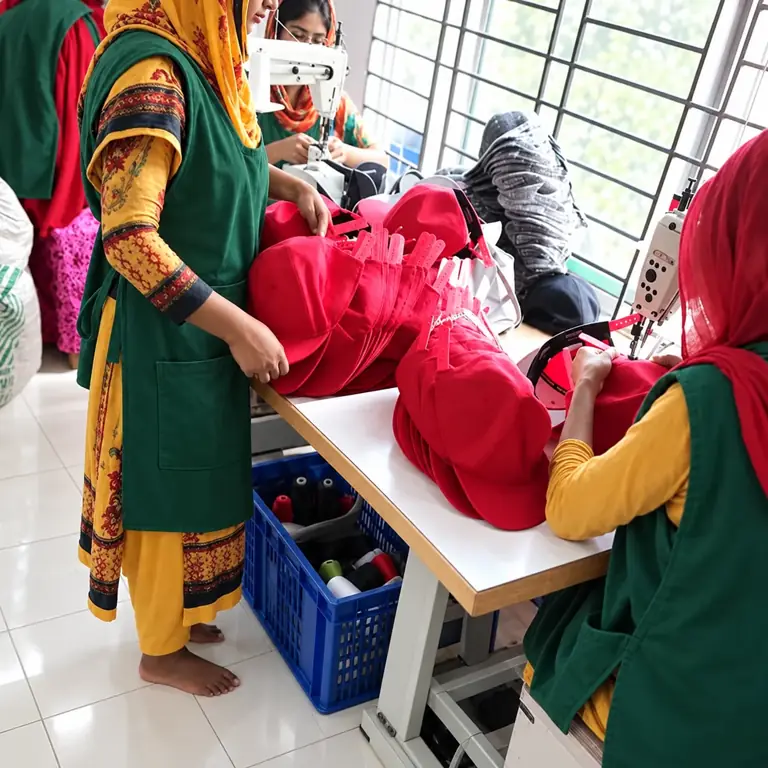
Agree the actual production route
Ask the supplier to identify the proposed stages and the decisions needed before each handoff. Cutting, assembly, decoration, finishing and packing may require different references. If a treatment or application sequence is important, show it in the agreed project plan.
For industry background, New Era describes its own cap-making sequence. The relevant working plan for a custom order should identify the actual supplier’s proposed route, components and approval dependencies.
Release a complete reference package
Connect the accepted sample ID to the current specification, material references, artwork and trim list. State which item combinations the approval covers. Keep any remaining condition visible rather than relying on a general message saying that the sample is approved.
The Dad Hat Sampling Guide helps distinguish accepted details from provisional components. Resolve the required inputs before a department treats an early development sample as the complete production reference.
Keep component versions identifiable
Record the fabric, sweatband, visor, closure and other relevant component references used for the released design. Map differences to the correct cap item. A change to one colorway should not silently update every item in the range.
If a substitution is proposed, identify it before the affected work proceeds. Ask which appearance, fit, decoration or other agreed checks need to be repeated. Keep the original reference and the proposed replacement distinguishable in the record.
Link decoration work to the correct cap items
Identify the artwork revision, application method, finished dimensions, colors and placement. Keep front, side and rear applications separate where relevant. A job reference should point to the intended graphic rather than leaving a team to choose from several similar files.
Use the custom logo dad hat brief for those inputs. For stitched applications, retain the representative decorated sample and the approved material combination alongside the artwork record.
Record quantities at each handoff
Keep the issued quantity, quantity received by the next stage and any held or returned work clear. Identify the item and work reference concerned. If counts differ, record the reason and responsible next action rather than changing the total without explanation.
The handoff record should also show work that remains open. An item awaiting review or correction should remain distinguishable from the quantity accepted for the next agreed stage.
Use specific review comments
Link a concern to the sample or work reference, affected item, observed feature and required comparison. A note such as “check front logo position against sample D4” gives a clearer task than “improve quality.” Add marked views where they explain the issue.
Keep product checks appropriate to the agreed specification. If an inspection or test is required, identify its scope and evidence separately. A stage record should not describe work as tested or accepted without the corresponding result or decision.
Close rework and changes before the next release
- Identify the affected item and work quantity.
- Describe the issue and reference the agreed requirement.
- Record the proposed correction or design change.
- Identify who reviews the result and closes the comment.
- Update the released version where the accepted design has changed.
Retain a clear history. A correction to restore the approved design and a buyer-requested design revision are different events and should remain identifiable.
Connect finished goods with packing records
Reconcile the released item quantities with the final packing allocation. Check that labels, hangtags and other item-specific components match the current trim package. Use the trim release checklist to identify the accepted versions.
The wholesale dad hat assortment checklist connects item codes, carton contents and receiving records. Carry the actual final allocation into that handoff rather than assuming it matches the first planning sheet unchanged.
Common production handoff questions
Does the accepted sample replace a written specification?
Use the sample and specification together, with clear references to the decisions each one controls. Record the accepted version and its approval scope.
Should held work appear in the released total?
Keep its status visible and distinguish it from the quantity approved for the next stage. Resolve the relevant review or correction before updating that status.
What should accompany a production enquiry?
Send the design references, current specification, item quantities, artwork and packing needs. Use Contact Wenext Caps to review the proposed production route and the inputs still needed.